Use this simple energy budget to frame a fleet or depot discussion. It is a starting point for your project brief.
ILLUSTRATIVE ENERGY BUDGET
10 vehicles · 30 kWh each · 8-hour window
300kWh total energy
Average power over the window37.5 kW
Idealised calculation: vehicles × energy ÷ hours. Excludes charging losses, peak demand and other site loads. This is not a charger rating or an electrical design.
Available supply, existing site loads, electrical drawings and the proposed charger locations.
02Vehicles & charging pattern +
Vehicle models, connector requirements, daily energy need and the times vehicles are available to charge.
03Access & management +
Who will use the chargers, access rules, monitoring requirements and any charging-management interfaces.
04Rollout & expansion +
Initial quantities, target schedule, procurement stage and room for additional charging points.
AC and DC EV charging equipment for your site
Choose EV charging equipment around vehicle dwell time, charging demand and the electrical supply available on site. AC destination charging and DC fast charging meet different operating needs; charger rating alone does not determine charging performance.
AC chargers: longer parking periods, onboard vehicle charger limits, user access and installation layout.
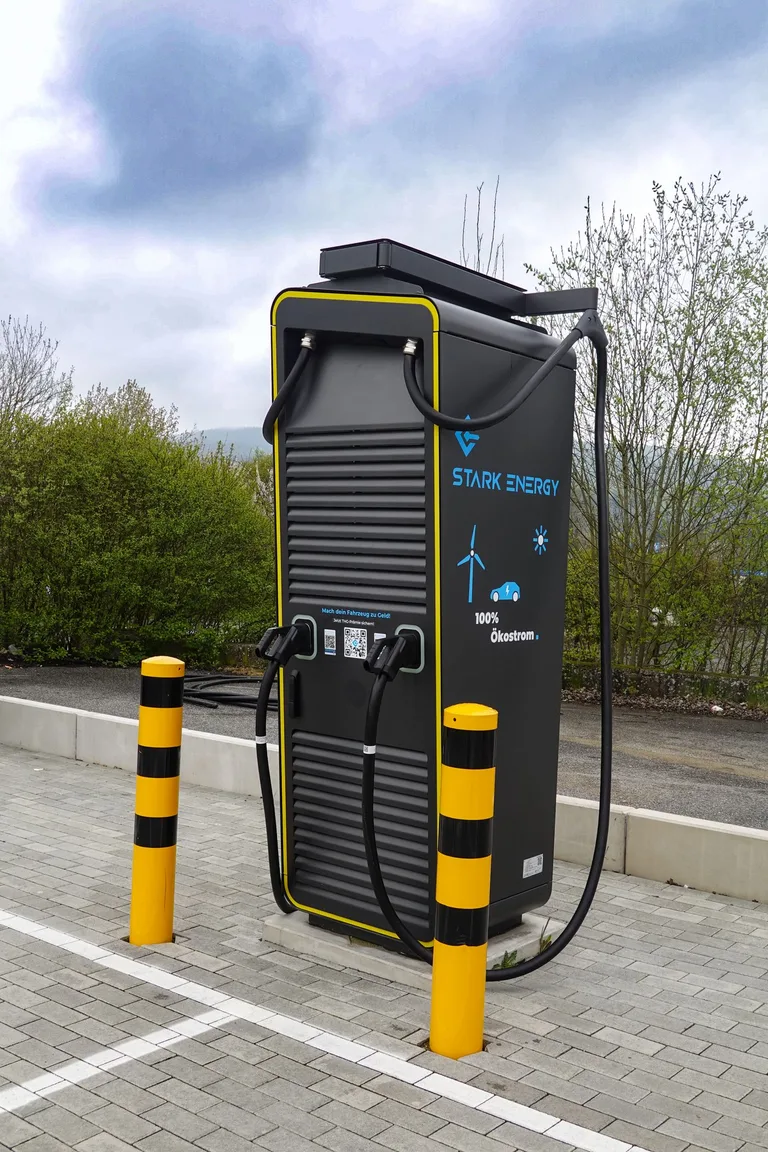
DC fast chargers: vehicle acceptance rate, electrical capacity, concurrent charging and operational turnaround.
Charging management: connector compatibility, connectivity, payment needs and load management.
Common project questions
What is the difference between AC and DC charging?
With AC charging, the vehicle’s onboard charger converts power for the battery. DC charging equipment performs that conversion outside the vehicle and supplies DC to the vehicle.
What should I include in a charger quotation request?
Include vehicle types, expected parking duration, available electrical capacity, number of charging points, connector requirements and project schedule.
Start with the energy each vehicle needs before departure and how long it stays parked. Then check how many vehicles charge at once and how much power the site can share.
AC charging for longer stops
Evaluate AC for overnight depot parking or vehicles parked for much of a shift. Check each vehicle's onboard AC limit and how the site will share power across charging bays.
Evaluate DC when vehicles need substantial energy during short stops. Compare the vehicle charging curve, power per connector during concurrent sessions and site electrical capacity.
A vehicle needing 30 kWh over six hours requires an average of 5 kW at the battery. The site must also account for charging losses and simultaneous sessions.