
MATIMCO · EQUIPMENT & APPLICATIONS
DC EV charging equipment
Scope DC charging around vehicle turnaround, energy demand and the power available on site. Compare the complete charging arrangement, including concurrent sessions, connectors, management and integration.
PROJECT PLANNING
DC charging: plan around the real turnaround window
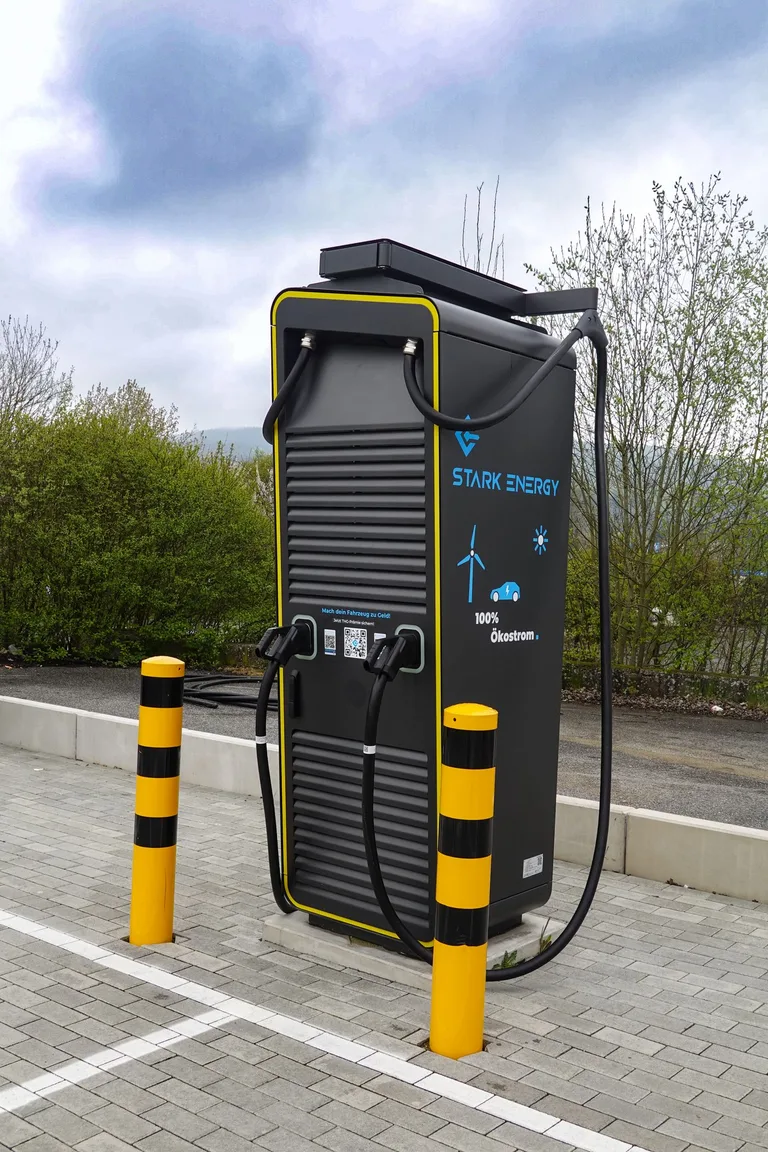
DC charging equipment converts power outside the vehicle and supplies direct current to its battery. The right arrangement depends on energy per stop, vehicle charging behaviour and the power available when several vehicles charge together.
| Requirement | What to compare | Why it matters |
|---|---|---|
| Energy and dwell time | Energy needed per session and time before departure | Defines the operational charging window. |
| Vehicle compatibility | Connector, voltage range and vehicle acceptance behaviour | A charger rating alone does not determine delivered power. |
| Concurrent charging | Power available per connector and allocation between vehicles | Output may be shared when more than one vehicle connects. |
| Site integration | Supply capacity, other loads, management and layout | The complete installation must fit the site and operating plan. |
Before you choose
Does a DC charger deliver its rated power throughout a session?
Not necessarily. Vehicle limits, battery state of charge, temperature and shared site or charger power affect delivery. Compare the relevant charging window and vehicle behaviour rather than assuming a constant maximum output.
Should a fleet use only DC chargers?
Not automatically. Evaluate longer parked periods for AC charging and shorter turnaround windows for DC. A mixed arrangement may suit different duties; review the fleet schedule and site capacity before selecting equipment.